
October 27, 2025
Last Soul Ultra
67 Hours of pain, pressure, and purpose: my journey through the backyard ultra.
Lapland Arctic Ultra – Pawel Dregan’s 515-kilometre Expedition across the Arctic Wilderness.
Humanity’s knowledge of the world was once a luxury provided by a species of man we have agreed to think of as extinct.
Modernity and its persuasive veil of comfort have eliminated the blanks on the maps of our world—oceans and great plains no longer need valiant crossing, uncharted territories are no more, and distant cultures can study each other in excruciating detail, never once forced to take a single step outside of a technology-induced cosmos of safety and familiarity. The planet is documented now, photographed from every angle.
So what use do we have for explorers and adventurers?
What contribution do the brave and audacious have to offer the rest of mankind?
Why do we explore?
It is a question that hangs over every age convinced it has reached the terminus of history. Not too long ago men sailed westward not knowing if there was land beyond the horizon. They vanished into polar wastes and the roaring sea, crossed mountain ranges that killed entire expeditions, and disappeared into deserts carrying little more than instinct, conviction and prayer. The explorer occupied a sacred place in civilisation because he enlarged the world—he returned with maps, stories, warnings, possibilities. He proved that the edge was farther away than people imagined.
But modern man, cocooned in certainty, has mistaken geographical completion for existential realisation. Because the earth has been measured, we assume the frontier itself is dead.
And yet the old impulse survives.
Exploration was never merely about land—it was, has always been, and remains to this day an expression of human capacity.
This is a truth I was exposed to when watching my dear friend drag a sled through 515 kilometres of Arctic wilderness across frozen Scandinavia. The Lapland Arctic Ultra is a race so ridiculously punishing that even its statistics seem reluctant to be believed. Nearly seven days of temperatures collapsing far below zero. Endless snowfields. Isolation. Exhaustion. Sleep deprivation. A human being moving through the white silence of the Swedish Arctic with only the most primitive mandate available to man: continue.
There is a tendency to reduce today’s ultra-endurance athletes to caricatures. Narcissists in expensive gear, dopamine addicts chasing suffering for social media applause. The criticism is understandable in an age where every achievement is photographed before it is even understood. Cynics might justifiably contend that modern-day ultra-endurance running and herculean expeditions of this magnitude serve more often than not simply the greater glory of self. Such critique, however, goes wholly against the constitution of the man I know Pawel Dregan to be.
To know him, even briefly, is to understand that gentleness and ferocity are not opposites—they often live harmoniously in the same man. He is profoundly loyal, deeply kind, and wildly and unmistakably devoted to the life he has built beside his wife, whom he speaks of not as an accessory to achievement but as the central blessing of his existence. There are men who pursue hardship because they are fleeing life—my friend Pawel appears to pursue it because he loves life so intensely he wishes always to encounter it in its rawest form.
That distinction matters.
Before the race began, he had prepared meticulously. His body was trained, his mind fortified and disciplined. I know, because just a few weeks prior to his adventure we trained together in the Mallorcan hills for just over a week—a training camp that proved to me he was truly in miraculous shape and excited to put his body and spirit to the test.
Yet preparation, he would later discover, is humbled quickly by the Arctic, for the cold is a violent thing which cares not for something as feeble and fragile as human preparation. Snow is not a singular substance there; it shifts temperament constantly. It changes character. It behaves. One hour it is compact earth, the next wet cement, the next ash. There were entire sections of the race which made running completely impossible due to the changing consistency of the snow beneath Pawel’s feet. During the crossing itself, movement is governed almost entirely by adaptation.
There were also other ways in which the cold imposed its own laws. Hunger became utterly insatiable. Sleep—often the first thing to be sacrificed during these races and expeditions—turned quickly from luxury into biological necessity. Energy disappeared with alarming speed. The body, fighting merely to remain warm, burned through reserves violently. The Arctic stripped existence down to fundamentals: heat, motion, calories, shelter. Civilisation vanished behind him with every kilometre, and the distance whispered to him a truth most never come face to face with:
The only way out really is through.
This is where prolonged endurance in hostile environments becomes soul-revealing. Masks disappear and modern identity, so often constructed from performance and posture, begins to fracture. What remains is elemental character. And Pawel has one pervading characteristic: he is purposeful. Purpose is perhaps the defining trait of all great explorers. It is not recklessness, it is not thrill-seeking, and it is certainly not mere bravery. It is a voluntary confrontation with uncertainty in pursuit of something difficult to articulate but instantly recognisable when witnessed.
Midway through the Arctic crossing, Pawel’s body began to fail him. Shin splints emerged after prolonged movement in snowshoes, a familiar injury carrying terrible psychological weight. It had ended a previous expedition across Germany, and the memory of this injury has since been stored in his mind and body. Human beings can survive inconceivable physical pain when meaning remains intact, but once hope fractures, collapse follows with murderous intent.
Now, in the frozen north, the pain returned like a prophecy.
Pawel was concerned. Of all the enemies—the cold, the ice and the distance—demoralisation was the most dangerous of them all.
The slow erosion of inner conviction reared its ugly face, but Pawel was ready. He spent the third night sleeping in an open shelter at −20°C. Three hours of sleep had to be enough, and so began day four at 4:30 am. The pain remained a companion, but a silent one. Pawel charged on. The race was still his to decide.
And ultimately, endurance and defiance are exactly that—a decision. It is why endurance athletes fascinate us, for they externalise a private human struggle every person recognises. Every human life eventually becomes an argument between surrender and continuation.
“We choose to go to the moon in this decade and do the other things not because they are easy but because they are hard. Because that goal will serve to organise and measure the best of our energies and skills, because that challenge is one that we are willing to accept, one we are unwilling to postpone and one which we intend to win.” – JFK
John F. Kennedy understood this idea well when he addressed America at Rice University in 1962, and the message endures because it articulates something eternal: Hardship, willingly chosen, has intrinsic value. Not because suffering itself is noble, but because difficulty clarifies the soul. It reveals reserves of courage, ingenuity and perseverance inaccessible through comfort alone.
Civilisations are not built by people seeking ease, for ease does not provide the constitution necessary to build.
The explorers who crossed oceans, the mountaineers who vanished into storms, the pioneers who pushed beyond borders—they were all participating in the same ancient instinct. Humanity advances because certain individuals refuse the boundaries imposed by fear and familiarity. One person really can change the world.
Shackleton’s doomed Endurance expedition remains one of history’s great examples not because Antarctica was conquered, but because the human spirit was tested there with terrifying severity, and in the face of this gruesome severity the human soul proved itself capable of extraordinary resilience.
The ice became secondary; the revelation was man himself.
And so it was in the Arctic for Pawel.
After days of exhaustion, deteriorating conditions and mounting physical pain, he continued pulling his sled northwards through slush and darkness. The temptation to stop became overwhelming when small shelters along the final stage of the route offered warmth and sleep, but Pawel is a man hungry for the taste of well-kept promises, so he passed them and kept moving, also insulting in the process the spirit of debilitating fatigue. At one point, heavy and depleted, he collapsed onto his sled for a six-minute nap before rising again into the polar night. The final 60-kilometre section of the race, which the winner of this year’s race needed 15 hours to complete, Pawel completed in under 12.
When dawn finally arrived over the Arctic landscape, it did not merely illuminate snowfields; it illuminated completion. A man emerging from a confrontation with himself.
He crossed the finish line in second place after nearly seven days in conditions that would appear uninhabitable to most people reading about them from heated rooms thousands of miles away.
But the placing is almost irrelevant. I congratulate him warmly on this failure, for victory, after all, is the dullest possible conclusion to any adventure. It reduces a story to a statistic. Finishing second, however, leaves a delicious space for reflection.
And what matters most is what journeys such as his preserve.
The modern world risks becoming hostile to the very instincts that created it. Convenience has immense value, but comfort, when worshipped absolutely, produces a hideous spiritual stagnation. We are descendants of voyagers, migrants, builders and risk-takers. Entire nations were founded by people willing to endure uncertainty in pursuit of possibility. To lose that impulse entirely would be to amputate something fundamentally human.
This is why we still need explorers.
Not because there are continents left undiscovered, but because there are dimensions of human experience still unmapped. Courage and resilience, though so richly documented, remain unexplored territory. Devotion, suffering, endurance, transcendence—these frontiers stretch infinitely inward.
The human soul is still wilderness.
And perhaps that is the responsibility inherited by modern adventurers and ultra-endurance athletes. We voyage not across unknown seas, but across the hidden interior of man himself. We return carrying evidence that the boundaries governing ordinary life are illusions negotiated long before true limits are reached. We remind civilisation that comfort is not the apex of existence—meaning is.
So while satellites orbit overhead and every coastline has long since been named, there remains one vast canvas still demanding exploration, and we stand under an obligation to chart it bravely for those who come after us.
For the world may have been conquered,
but man is not.


67 Hours of pain, pressure, and purpose: my journey through the backyard ultra.
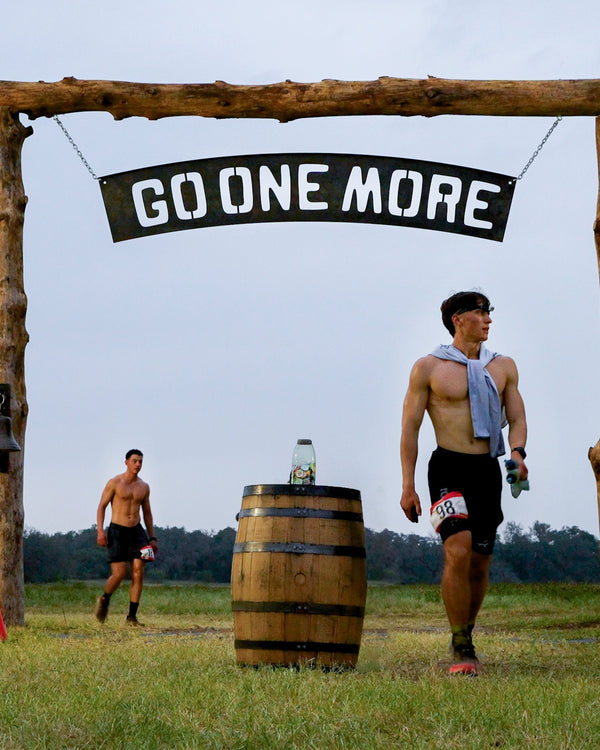
At the Go One More Ultra in Texas, Kim Gottwald pushed through 56 hours and 382 km — an experience that reshaped both his running and rappid.
67 Hours of pain, pressure, and purpose: my journey through the backyard ultra.
At the Go One More Ultra in Texas, Kim Gottwald pushed through 56 hours and 382 km — an experience that reshaped both his running and rappid.
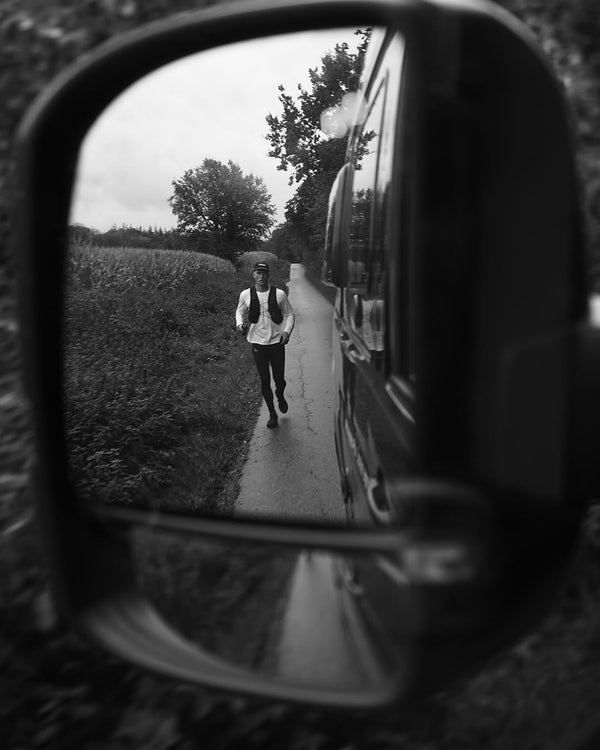
Retracing a YouTube tour from 2014, Kim Gottwald covered 1,160 km on foot through Germany, facing weather, injuries, and endurance


shipping destination
Your cart is empty.